
The institute
FEMTO's news

A novel approach to filling miniature atomic clock cells

This new method, which gains flexibility, paves the way for large-scale production of atomic sensors.

In recent years, the development of miniature atomic instruments with high sensitivity and accuracy such as clocks or magnetometers is experiencing a real boom. Miniature atomic clocks are intended for example for telecommunications or navigation equipment. These instruments are generally based on the interrogation of a set of alkaline atoms in vapour phase within a cell of millimetre dimensions, generated by micro-fabrication techniques and composed of glass and silicon. One of the difficulties lies in filling these cells with various species (alkaline metals and buffer gases) while preserving the purity and stability of their internal atmosphere over time.

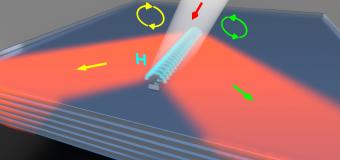
In this context, the work published by FEMTO-ST in Nature Microsystems & Nanoengineering and entitled "Wafer-level vapor cells filled with laser-actuated hermetic seals for integrated atomic devices" proposes a new cell filling technique, inspired by those used for the realization of traditional centimetric glass cells produced by glass blowing, but adapted to microfabrication techniques. This technique is based on micro devices structured in glass and silicon similar to valves that can be operated by laser.

See INSIS/CNRS news

Contact : Nicolas Passilly

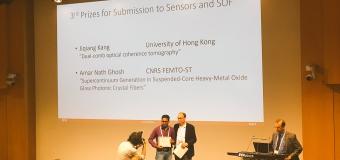
  • Amar Nath Ghosh awarded at OSA Advanced Photonics Congress

    Amar Nath Ghosh won the Best student paper award of the OSA Advanced Photonics Congress , Zurich.

    Read more
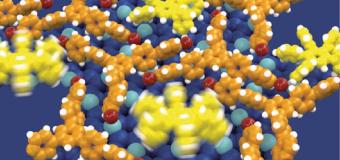
  • L'équipe nanoscience de FEMTO-ST en couverture du journal de la société chimique de France

    Read more
  • Focus on the innovations of the "hydrogen-energy systems" sector

    A few days after the announcement by the government of the launch of a major national hydrogen plan, the Femto-ST institute is organizing on 20 June 2018 at the FCLAB in Belfort, a focus on innovations in the "hydrogen energy systems" sector.

    Read more
  • Robotic assembly of the smallest house in the world

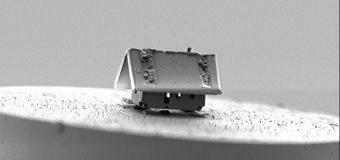
    the handling and assembly capabilities of nanocomponents of the "μRobotex" platform make the buzz on the net and in the international press through the origami manufacturing of a micro-house at the end of an optical fiber whose dimensions are less than the diameter of a hair.

    Read more
  • Nicolas Andreff, receives the scientific award "Charles Defforey" from -Institut de France Foundation

    Awarded May 30 under the Dome of the “ (Institut de France) " by Jean-Paul Laumond, a member of the Academy of Sciences, this Grand Prize crowns the work & skills of Nic

    Read more
  • International Day of Light 2018

    Following the success of the International Year of Light, which highlighted the importance of light-based science and technology and generated more than 13,000 activities in 147 countries, UNESCO proclaimed May 16 as the International Day of Light.

    Read more
  • Enrico Rubiola honored at IFCS 2018

    Enrico Rubiola will receive the W. G. Cady Award at the IFCS 2018 on May 24th.

    Read more
  • Inauguration de la plateforme Oscillator IMP le 28 mars

    Une nouvelle plateforme technologique dédiée à la caractérisation de la stabilité des oscillateurs est désormais mise à la disposition des acteurs de la recherche et de l’industrie et fera l’objet d’une inauguration le 28 mars prochain.

    Read more
  • OPTICS 2018 : Sheler Maktoobi, Best Paper Award !

    Sheler Maktoobi (doctorante département d'optique) s'est vu remettre le Best Paper Award lors de la conférence OPTICS 2018 (SPIE)

    Read more
  • Visite ministérielle à FEMTO-ST

    Vendredi 16 mars, La ministre de l'Enseignement supérieur, de la Recherche et de l'Innovation, Frédérique VIDAL, est venue à Besançon découvrir les activités de recherche de FEMTO-ST et échanger avec les membres de l’institut.

    Read more