
The institute
FEMTO's news

Toward a new generation of recyclable composites

The PEPR RECYCOMP project, in collaboration with the FEMTO-ST Institute, is developing recyclable high-performance composites for a circular economy.

Composites, which combine a fibrous reinforcement (carbon, glass, flax, etc.) with a polymer matrix, offer both lightness and mechanical performance.  These materials are thus increasingly used in many industrial sectors such as aerospace, automotive, energy, and sports. However, recycling them by separating the fiber and matrix components—remains a complex challenge today, exacerbated by the ever-increasing volume of end-of-life materials.

As part of the PEPR (Priority Research Programs and Equipment) “Recycling, Recyclability, and Reuse of Materials,” the RECYCOMP project (ANR-22-PERE-0005) aims to address this major industrial and environmental challenge by developing a new generation of recyclable organic matrix composite materials without compromising mechanical performance.Bringing together nine research laboratories from across the country, this four-year project—which began in February 2023—explores two innovative approaches: supercritical solvolysis and twin-screw extrusion, using end-of-life components from wind turbine blades, ships, and automotive sandwich structures.  In addition, the project also proposes incorporating the recycling process into the material’s design from the outset. For example, flax fibers are first surface-treated with iron oxides to impart magnetic properties to them, enabling the selective recycling of their components.

The contribution of the FEMTO-ST Institute, through Adam LEVEZIEL’s thesis, is to characterize the interfacial properties of the materials developed in the RECYCOMP project at the micro-scale. Indeed, the fiber-matrix interface plays a crucial role in the mechanical performance of composites. To this end, a comprehensive study was conducted on the detachment of microdroplets from individual fibers. This test involves measuring, on a single fiber approximately 10 to 20 µm in diameter (thinner than a human hair), the force required to detach a microdroplet of polymer resin in order to evaluate the fiber-matrix bond in a composite.

In particular, an in situ device was developed with support from the MIMENTO, MIFHySTO, and AMETISTE platforms to enable this test to be conducted in an X-ray microtomograph and thus observe, for the first time in real time, the interfacial damage mechanisms responsible for the composite’s failure. The results obtained therefore provide a better understanding of the behavior of the fiber/matrix interface in the materials developed in the RECYCOMP project.

Ultimately, this research paves the way for the development of materials that are more durable, high-performance, and easier to recycle, addressing the environmental and industrial challenges of the future.


Read n° 168 of JEC COMPOSITES Magazine : https://digital-magazine.jeccomposites.com/
 
  • Imaging quantum interference of entangled photon pairs of extremely high dimensionality

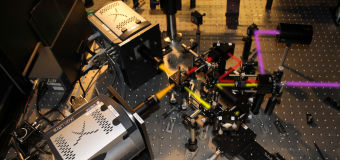
    Researchers from the Optics Department have developed an imaging device allowing the spatial and temporal resolution of the phenomenon of quantum interference between pairs of entangled photons of extremely high dimensionality.

    Read more
  • Concours posters doctorants : 11 ambassadeurs récompensés

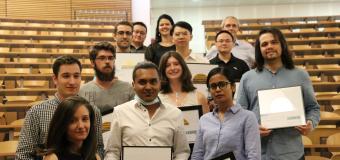
    11 doctorants de 1ère année mis à l’honneur lors de l’Assemblée générale de FEMTO-ST du 10 juillet.

    Read more
  • Fei GAO Receives IEEE J.D. Irwin Early Career Award

    As a member of the SHARPAC team and Deputy Director of FEMTO-ST, Fei Gao has been recognized by the IEEE IES Society for his outstanding work in improving the reliability of hydrogen electric powertrains.

    Read more
  • Daniel HISSEL, winner of the CNRS 2020 Innovation Medal

    Full professor at the University of Franche-Comté, researcher at FEMTO-ST Institute and co-founder of a start-up on efficient hydrogen fuel cells, Daniel HISSEL is one of the four national winners of the CNRS 2020 Innovation Medal.

    Read more
  • A new source of infrared light thanks to fibre optic cascades

    Scientists from  FEMTO-ST Institute and McGill University (Montreal, Canada) have designed and developed in collaboration with three French companies a light source covering the entire mid-infrared wavelength range: from 2 to 10 µm.

    Read more
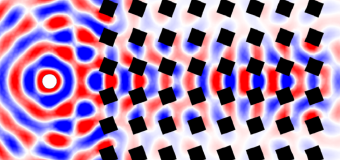
  • Topological crystals to guide waves on the water surface

    Topological crystals have the property of being conductive on their surface, but insulating in their volume which allows very efficient wave guidance by engineering the structure of these materials, generally arranged in a hexagonal symmetry, inspired by the graphene.

    Read more
  • Hommage à Raymond BESSON, « l’homme du quartz à 10-14 »

    Scientifique passionné, professeur à l’ENSMM jusqu’en 2006 et directeur du Laboratoire de Chronométrie, Electronique et Piézoélectricité entre 1978 et 2002, Raymond Besson était réputé dans la communauté internationale du temps-fréquence pour ses résonateurs à quartz et est décédé ce 15 avril.

    Read more
  • Des visières de protection produites en série

    Dans le cadre de la crise sanitaire actuelle, FEMTO-ST, en lien avec ses tutelles, s'est impliqué dans la réalisation de deux modèles de visières de protection qui sont produites en série sur le site bisontin depuis le 9 avril 2020.

    Read more
  • An innovative solution to detect pollutants in the subsoil

    Researchers from FEMTO-STinstitute and the company TOTAL SA have succeeded in detecting organic pollutants with methods that did not require sampling and have been able to monitor the evolution of the pollution of the subsoil over periods ranging up to several years.

    Read more
  • FEMTO-ST is closed

    Within the framework of Coronavirus (COVID-19) epidemic and  following the measures announced by the President of the French Republic,  all the premises of our laboratory in Besançon, Belfort and Montbéliard cities are closed to the public from this Tuesday March 17.

    Read more