
The institute
FEMTO's news

Vincent Laude reçoit le prix IEEE Carl Hellmuth Hertz 2016

Le IEEE Carl Ellmuth Hertz Ultrasonics Award est un prix international décerné annuellement par
la société Ultrasonics, Ferroelectrics, and Frequency Control (IEEE/UFFC). Il récompense un
chercheur de 10 à 25 ans d’expérience dont les travaux ont été effectués dans le domaine de la
physique des ondes ultrasonores. Il est sélectionné par un jury international, le Ultrasonics Award
Committee, et remis chaque année lors du congrès international IEEE Ultrasonics Symposium.

V. Laude

V. Laude

Remise prix

Remise prix

Remise prix

V. Laude

“For substantial contributions to the physics of phononic crystals and of the interaction of sound and light”
La citation accompagnant la récompense remise à Vincent Laude fait état de ses « contributions
substantielles à la physique des cristaux phononiques et des interactions entre son et lumière ». Le
prix a été remis à Tours, le 19 septembre 2016, lors de la cérémonie d’inauguration du congrès
IEEE Ultrasonics Symposium 2016.
Vincent Laude est directeur de recherche au CNRS et membre du département Micro Nano
Sciences et Systèmes (MN2S) de l’Institut FEMTO-ST. Ses activités de recherche concernent la
propagation des ondes élastiques et acoustiques dans les micro et nano structures, en particulier
dans les cristaux phononiques. Ces matériaux périodiques artificiels trouvent des applications pour
l’isolation sonore, la protection contre les vibrations ou encore la téléphonie mobile. Il s'intéresse
également aux interactions entre son et lumière dans les nanostructures. Il est l’auteur du livre
« Phononic crystals: Artificial Crystals for Sonic, Acoustic, and Elastic Waves » paru chez
Degruyter en 2015 et a publié plus de 120 articles dans des revues internationales à comité de
lecture. Il a dirigé le département Micro Nano Sciences et Systèmes de FEMTO-ST de 2006 à 2009,
dont il est aujourd’hui directeur adjoint. Il exerce des fonctions d’animation scientifique au sein du
laboratoire d’excellence Action et du GDR Ondes.
Document en pdf (pdf, 176 Ko)

  • Understanding energy transfers during photosynthesis

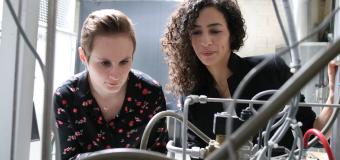
    Using three pigments manipulated by scanning tunneling microscopy, researchers from IPCMS and FEMTO-ST are studying energy transfers between molecules to gain a finer understanding of the photosynthesis mechanism in plants. This work is published in Nature Chemistry.

    Read more
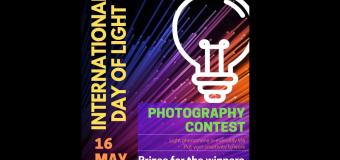
  • International Day of Light on May 16th

    This year, the Student Chapter of FEMTO-ST organizes on this occasion a photo contest on the theme ′′ Light phenomena in everyday life ".

    Read more
  • AMAROB labelled Deep Tech company

    Spin off of FEMTO-ST, Amarob technologie has received the Deep Tech company label awarded by Bpifrance.

    Read more
  • New platform to support the design and optimization of fuel cell hybride system and battery

    Virtual FCS" is the first freely accessible online simulation platform to support fuel cell manufacturers and users.

     Supported by a European funding, "Virtual FCS" has for French partner the University of Bourgogne-Franche-Comté through the FEMTO-ST institute and the FC-LAB

    Read more
  • ThermoBot : micro robots that walk on water

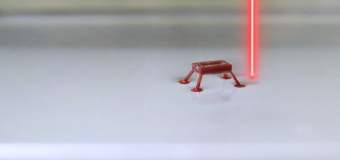
    Imagine, a robot, the size of a fly, walking on the surface of the water and pursued by a laser beam. One could believe in a science fiction scenario...

    Read more
  • Recognizing liars from the sound of their voice ?

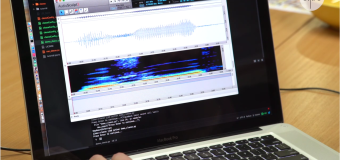
    Scientists have prouved that the intensity, speed and pitch of the speaker's voice automatically influences our perception of the reliability and honesty of his or her speech. This work is published in the prestigious journal "Nature Communications"

    Read more
  • European project for the development of sustainable and high-performance bio-based composites

    Led by FEMTO-ST and supported by the University of Franche-Comté, the « SSUCHY » R&D project which brings together 17 European partners is entering its final phase. The project is now quite advanced.

    Read more
  • Understanding the cytotoxicity of metallic nanoparticles

    A recent study published in the journal "Chemical Science" and involving FEMTO-ST gives new insights into the understanding of the mechanisms of DNA alteration in cells by metallic nanoparticles.

    Read more
  • Artificial intelligence for next-generation ultrafast photonics

    How can machine learning and associated methods improve the development of next-generation laser sources and revolutionize applications where ultrafast light plays a central role?

    Read more
  • Strong involvement of FEMTO-ST in the H2020 project "PhotonHub Europe"

    The objective of this project is to help European SMEs to increase their competitiveness through photonics with a online guidance, which will offer the support of 54 leading competence centers in Europe, including FEMTO-ST, which is also the scientific coordinator at the national level.

    Read more