
The institute
FEMTO's news

Conférences Nanozoom - Micronora

En partenariat avec Micronora, notre institut de recherche organise les 24 et 25 septembre prochain à Besançon, au cours du salon international des microtechniques, un cycle de conférences de haut niveau en langue française et anglaise dédié aux applications des micro et nanotechnologies. Cette manifestation, dont l’objectif consiste à mieux faire connaître, notamment auprès des industriels, les potentialités dans ce domaine, est organisée autour de quatre sessions :

- Session plénière

- Métrologie et nanocaractérisation (2 demi-journées)

- Micro et nanofabrication (1 demi-journée)

- Nanomatériaux et surfaces (1 demi-journée)

La session plénière a pour but d’illustrer les diverses approches de la recherche partenariale en micro et nanotechnologies dans la région de Franche-Comté et pays voisins.

Les sessions techniques sont animées par des conférenciers de renom des différentes thématiques proposées, avec un souci d’expliquer au public industriel les enjeux et le potentiel applicatif futur.

L’accès à ces conférences est public et ouvert à tous les visiteurs et exposants du salon.

[[{"fid":"1782","type":"media","view_mode":"default","attributes":{"class":"media-element file-default ext-link"},"fields":{"format":"default","alignment":""},"link_text":"Voir le programme d\u00e9taill\u00e9 de ces conf\u00e9rences (pdf, 390 Ko)"}]]

Pour plus d'informations, voir le site MICRONORA

  • Giacomo Clementi, grand prize i-PhD

    For his work on Lithium Niobate (LiNbO3), which has led to the design of original and efficient devices for the recovery of vibratory energy by the piezoelectric effect, in particular for connected objects.

    Read more
  • Concours des doctorants-ambassadeurs FEMTO-ST

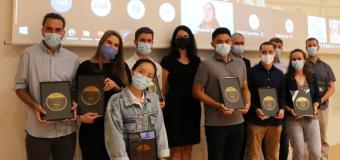
     Remise de prix aux trois vainqueurs du concours de meilleurs posters de présentation de travaux de thèse lors du séminaire interne FEMTO-ST du 2 juillet.

    Read more
  • Understanding energy transfers during photosynthesis

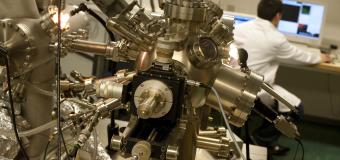
    Using three pigments manipulated by scanning tunneling microscopy, researchers from IPCMS and FEMTO-ST are studying energy transfers between molecules to gain a finer understanding of the photosynthesis mechanism in plants. This work is published in Nature Chemistry.

    Read more
  • International Day of Light on May 16th

    This year, the Student Chapter of FEMTO-ST organizes on this occasion a photo contest on the theme ′′ Light phenomena in everyday life ".

    Read more
  • AMAROB labelled Deep Tech company

    Spin off of FEMTO-ST, Amarob technologie has received the Deep Tech company label awarded by Bpifrance.

    Read more
  • New platform to support the design and optimization of fuel cell hybride system and battery

    Virtual FCS" is the first freely accessible online simulation platform to support fuel cell manufacturers and users.

     Supported by a European funding, "Virtual FCS" has for French partner the University of Bourgogne-Franche-Comté through the FEMTO-ST institute and the FC-LAB

    Read more
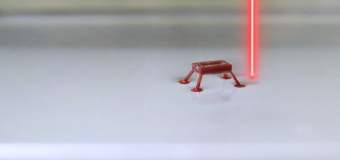
  • ThermoBot : micro robots that walk on water

    Imagine, a robot, the size of a fly, walking on the surface of the water and pursued by a laser beam. One could believe in a science fiction scenario...

    Read more
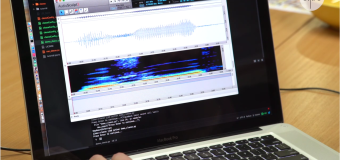
  • Recognizing liars from the sound of their voice ?

    Scientists have prouved that the intensity, speed and pitch of the speaker's voice automatically influences our perception of the reliability and honesty of his or her speech. This work is published in the prestigious journal "Nature Communications"

    Read more
  • European project for the development of sustainable and high-performance bio-based composites

    Led by FEMTO-ST and supported by the University of Franche-Comté, the « SSUCHY » R&D project which brings together 17 European partners is entering its final phase. The project is now quite advanced.

    Read more
  • Understanding the cytotoxicity of metallic nanoparticles

    A recent study published in the journal "Chemical Science" and involving FEMTO-ST gives new insights into the understanding of the mechanisms of DNA alteration in cells by metallic nanoparticles.

    Read more