
Launch of the European i-Nano-T project
The Bourgogne Franche-Comté region is banking on regional scientific and industrial synergy to drive innovation in nanomedicine.
The i-NanoT (Innovations in Theranostic Nanovectors) project, certified and funded under the Burgundy-Franche-Comté ERDF-ESF+ program for the period 2025-2028, is set to be officially launched on December 2, 2025, in Dijon on the campus of the University of Burgundy Europe. This large-scale project, with a total budget of €18.4 million (including €15.6 million in ERDF funding), represents a major initiative for the development of nanomedicine in the region.
Scientific context and challenges
Nanomedicine represents a decisive step forward for personalized medicine by exploiting the unique properties of nanometric structures to improve the diagnosis and treatment of diseases. Theranostic nanovectors, which are at the heart of the i-NanoT project, represent a major innovation by enabling the specific targeting of pathological cells, the controlled administration of active ingredients, and real-time monitoring of therapeutic efficacy. These approaches are particularly relevant to the challenges posed by cancers, inflammatory and infectious diseases, where precision treatment is crucial to maximize efficacy while minimizing side effects.
The consortium and strategic contributions
The consortium brings together the driving forces of academic research, with the participation of ICB, ICMUB, FEMTO-ST, Chrono-environnement, and UMR Right. Added to this are industrial partners committed to therapeutic innovation: VIVEXIA, Delpharm, and SON. The project also involves renowned healthcare institutions (CGFL, CTM Dijon Inserm) and technology transfer players (SAYENS and Santenov) to ensure an integrated approach from research to clinical application.
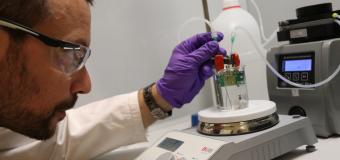
FEMTO-ST makes an essential contribution to the i-NanoT project by addressing one of the major challenges of drug nanovectorization: the structural and functional characterization of nanovectors. Through the Nano2BIO team in the MN2S department, the institute is mobilizing its expertise to explore the targeting and stealth properties of nanovectors by developing specific biointerfaces for targeted pathologies on biochips and sensors. FEMTO-ST deploys cutting-edge biophysical instrumentation and applies its expertise in surface and interface physicochemistry. These resources enable the qualification of biomolecular interactions and the investigation of structures at the nanometric scale. This approach positions the institute as a key player in optimizing the functional properties of these innovative systems.
Technological challenges and prospects
The project addresses several major scientific and technological obstacles, including the standardization of synthesis processes, the detailed characterization of the physicochemical properties of nanovectors, and the transition to industrial scale through the implementation of “kilo-lab” procedures. The aim is to develop a comprehensive platform dedicated to theranostic nanovectors, from design to preclinical validation, ensuring reproducibility and pharmaceutical quality.
Following this institutional launch, work will continue according to an ambitious schedule. The scale and collaborative nature of the project illustrate the regional momentum in favor of precision medicine. The expected benefits are significant, with a 30% increase in turnover for partner companies. The project thus reinforces the region's attractiveness in the field of nanotechnology/health, positioning the Bourgogne Franche Comté region as a center of excellence in the field of innovative biotherapies.
Lien : https://www.linkedin.com/company/i-nanot/
[[{"fid":"43135","view_mode":"default","fields":{"format":"default","alignment":"","field_file_image_alt_text[und][0][value]":false,"field_file_image_title_text[und][0][value]":false,"external_url":""},"type":"media","field_deltas":{"1":{"format":"default","alignment":"","field_file_image_alt_text[und][0][value]":false,"field_file_image_title_text[und][0][value]":false,"external_url":""}},"attributes":{"class":"media-element file-default","data-delta":"1"}}]]
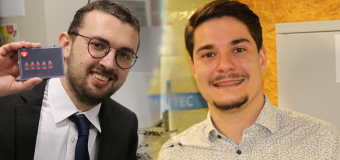
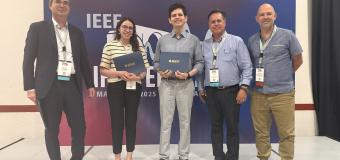
From left to right : C. ELIE-CAILLE, A. AL ASSAAD, W. BOIREAU, J. DEJEU, A. ROULEAU (FEMTO-ST Team)






-

INGÉNIERIE
Sciences informatiques