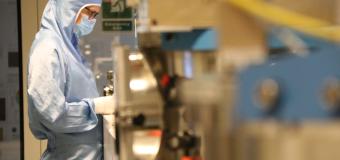

The institute
FEMTO's news

Un problème ouvert résolu en informatique : une réduction efficace de la taille de systèmes

Gérard Cécé du département DISC/FEMTO-ST a présenté lors de la
conférence LICS'17, les fondations d'une série d'algorithmes efficaces
du calcul de la plus grande relation de simulation d'un système.

La notion de simulation permet de comparer les comportements de systèmes
informatiques mais aussi de réduire la taille de ces systèmes afin d'en
faciliter l'analyse. On peut prendre en exemple le cas d'un système
évoluant au travers de  près de 150 000 configurations différentes et
qui a pu être réduit, grace à cette notion de simulation, à un système
évoluant dans moins de 1 000 configurations. Il est dès lors bien plus
facile d'analyser ce système réduit pour en valider le bon comportement
ou y détecter des erreurs.

La difficulté est que les algorithmes calculant la plus grande
simulation d'un système étaient soit économes en mémoire mais pas bien
rapides, soit rapides mais utilisant beaucoup de mémoire et donc
inapplicables sur de grands systèmes. Depuis 2007 se posait le problème
de l'existence d'un algorithme à la fois rapide et économe en mémoire.
L'article présenté à LICS répond positivement à cette question et
surtout met en évidences les fondations qui permettront de proposer de
nouveaux compromis, tant théorique que pratique, entre temps de calcul
et mémoire nécessaire à ce type d'algorithmes.
  • Using artificial intelligence to collect agricultural data

    ANR OCOD project combines intelligent sensors, drones and optimization for data collection in constrained natural environments

    Read more
  • A European project to prevent perineal tears

    PELVITRACK offers a predictive tool for patricians as part of an interdisciplinary European consortium involving FEMTO-ST.

    Read more
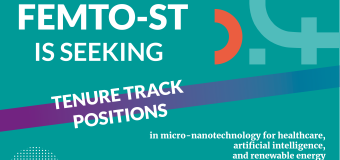
  • 12 postes d’enseignants-chercheurs à pourvoir à FEMTO-ST

    Informatique, Génie informatique - automatique et traitement du signal, Génie Civil - Physique et Energétique du bâtiment, mécanique – génie mécanique.

    Read more
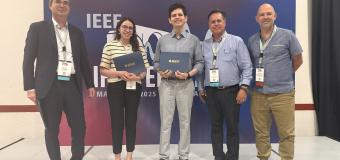
  • Best Paper Award at BIOSTEC 2025

    The work of Ouassim Boukhennoufa and his team combines AI and image optimization in nuclear medicine for more accurate and earlier detection of parathyroid anomalies.

    Read more
  • Kagomé structures for quantum technologies

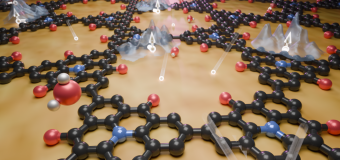
    Quantum technologies open up promising prospects, but require the development of new materials with remarkable properties.

    Read more
  • Launch of the European SAMI project for energy-free intelligent sensors

    A major scientific and technological collaboration between Silmach and FEMTO-ST in the field of intelligent, autonomous sensors kicks off on January 30.

    Read more
  • RENATECH 2024 PhD AWARD

    Adria Grabulosa is rewarded for his work on 3D printed circuits using an original two-photon optical additive manufacturing technique.

    Read more
  • Elsevier article award at BFAS 2024

    Artificial intelligence applied to the electroerosion machining process : Loïc Guiziou1, Emmanuel Ramasso1, Sébastien Thibaud1 et Sébastien Denneulin2 won second prize for best paper at the 8th International Conference on Belief Functions.

    Read more
  • Tribute to our colleague Sarah Benchabane

    The CNRS and the university community of Bourgogne Franche-Comté are in mourning following the death of Sarah Benchabane, Director of Research at the CNRS and internationally renowned researcher in phononics, affiliated to the FEMTO-ST laboratory.

    Read more
  • Does the i-motif structure of DNA exist in the cell?

    As part of an interdisciplinary project involving FEMTO-ST, a new scientific study is reopening the debate on the very existence of these structures in DNA and their potential therapeutic interest in cell biology for the treatment of certain cancers.

    Read more