

Closure of the S3-4AlpClusters project
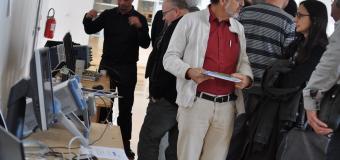
The final conference of the S3-4AlpClusters project was held in Venice on the 13th and 14th of March, in attendance of all the partners (including FEMTO-ST), observers, policy makers and members of the European Commission. The partners highlighted the results they obtained during the project: the innovation model of the smart specialization strategy (S3) *. This modele is composed of five elements:
- The creation of a base of evidence on the region's innovation capabilities, in particular to highlight the skills of companies, the region's historical knowledge and development opportunities.
- The identification of transformative activities: these are activities that have a strong potential for development and innovation by transforming existing industries. This step also requires identifying the skills to be developed to carry out these activities. These activities must have a competitive advantage on a global scale, based on local skills, so that it is justified to develop these activities on the regional territory. This operation can however be carried out in collaboration with neighboring regions, if the local authorities are not sufficient to implement them.
- The development strategy for transformative activities which should make it possible to define the actions (such as the creation of a consortium, the launching of a research project, the search for funds, etc.) to set up these activities. These actions must also involve all the regional actors necessary for the development of the activity.
- The implementation of the actions in the region, and possibly in neighboring regions, supported by a list of good practices for clusters. These actions must make it possible to reach a critical mass for the realization of transformative activities.
- The monitoring and evaluation of transformative activities: the S3 is a constantly evolving process, it is necessary to regularly ensure that the activities developed are always viable and always provide a competitive advantage.
[[{"fid":"4118","view_mode":"wysiwyg_fullw","fields":{"class":"media-element file-wysiwyg-350w","data-delta":"2","format":"wysiwyg_fullw","alignment":"","field_file_image_alt_text[und][0][value]":false,"field_file_image_title_text[und][0][value]":false,"external_url":""},"type":"media","field_deltas":{"2":{"class":"media-element file-wysiwyg-350w","data-delta":"2","format":"wysiwyg_fullw","alignment":"","field_file_image_alt_text[und][0][value]":false,"field_file_image_title_text[und][0][value]":false,"external_url":""}},"attributes":{"class":"media-element file-wysiwyg-fullw","data-delta":"2"}}]]
| [[{"fid":"1910","view_mode":"default","fields":{"format":"default","alignment":"","field_file_image_alt_text[und][0][value]":false,"field_file_image_title_text[und][0][value]":false,"external_url":""},"type":"media","field_deltas":{"1":{"format":"default","alignment":"","field_file_image_alt_text[und][0][value]":false,"field_file_image_title_text[und][0][value]":false,"external_url":""}},"attributes":{"class":"media-element file-default","data-delta":"1"}}]] |
More information on the innovation model is available on the project website. S3-4AlpClusters is an Interreg V B Alpine Space project with a total budget of approximately 2.5 million euros, of which 1.9 million euros from the ERDF, from 01/11/2016 to 30/04/2019 |
* The smart specialization strategy is an approach to economic development based on targeted support for research and innovation. It is about developing a vision, identifying sectors with the greatest strategic potential, setting up multi-stakeholder governance mechanisms, setting strategic priorities and applying policies to maximize development potential. of a region.




-

INGÉNIERIE
Sciences informatiques