
The institute
FEMTO's news

Polymer-based nanowires

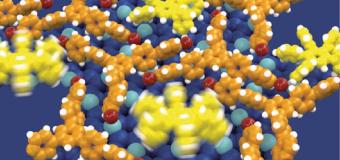
Molecules, salt and light :  an easy recipe to provide giant nanowires !

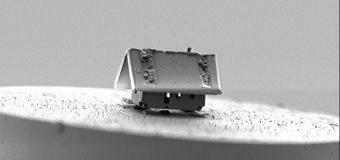
On-surface polymerization of organic precursors provides new possibilities to form highly-stable and atomically-defined nanostructures with desired properties. As emphasized by the Nobel Prize in Physics in 2016, awarded for early work in understanding topological phase transitions and topological phases of matter, the formation of artificial matter exhibiting properties controlled by their symmetry is very promising in nanoelectronics. This issue has been addressed by many research groups who performed on-surface reactions under ultra-high vacuum (UHV) conditions and on atomically clean single-crystal metal substrates. In this solvent-free environment, classical chemical reactions such as Ullmann type coupling, Glaser coupling, and many more have successfully been used to create well-defined and covalently bound organic 1D and 2D structures with dimensions of about 100 nm. However, for the basic building blocks of molecular circuitry to interconnect active devices there is a need to fabricate isolated nanowires with a length larger than 1 μm.

Other than length, the main limitations of structures fabricated to date for use in future nanoscale electronic and optical devices are (i) the use of metal substrates (for instance, leading to non-radiative quenching), (ii) the high number of defects in the formed covalent structures, and (iii) the side-products of some reactions that might remain on the substrate surface. This is why in our work, published in Nature Chemistry,  we overcome these identified obstacles by using a side product-free 1D polymerization on an alkali-halide surface. This new concept is driven by light-induced radical polymerization, a classic chemical reaction pathway, but one which has never been transferred onto the surface of bulk insulators so far. 

Noncontact atomic force microscopy was used to evaluate the geometrical structure of the fibres formed on the KCl substrate and to test both their mechanical and thermal stability. A deeper insight into the reaction mechanism and the energy barriers involved is obtained by comparing the experimental observations with calculations, which revealed the strong localization of the active biradicals at the fibre ends.

We hope that with our work we will ‘initiate’ a completely new way to synthesize organic compounds on surfaces, especially on insulating substrates.

Contact : Frédéric Chérioux
Link

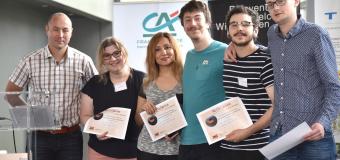
  • OPTICS 2018 : Sheler Maktoobi, Best Paper Award !

    Sheler Maktoobi (doctorante département d'optique) s'est vu remettre le Best Paper Award lors de la conférence OPTICS 2018 (SPIE)

    Read more
  • Visite ministérielle à FEMTO-ST

    Vendredi 16 mars, La ministre de l'Enseignement supérieur, de la Recherche et de l'Innovation, Frédérique VIDAL, est venue à Besançon découvrir les activités de recherche de FEMTO-ST et échanger avec les membres de l’institut.

    Read more
  • Création de la start-up VERSO Optim

    Fondée par trois membres de FEMTO-ST, la spin-off VERSO Optim propose des solutions logicielles d'optimisation efficaces dédiées aux problèmes de planification et d'optimisation dans les contextes industriels, notamment de logistique et de mobilité

    Read more
  • FEMTO-ST sur C8

    Les métamatériaux développés par FEMTO-ST pour limiter les nuisances sonores mis en avant dans l'émission "william à midi" sur C8 !!

    Read more
  • FEMTO-ST sur C8

    FEMTO-ST sur C8

    Read more
  • Métamatériau en torsion…en couverture de Science !

    Muamer Kadic, enseignant-chercheur d'UBFC au sein du l’institut FEMTO-ST, est co-auteur d’un article dans la prestigieuse revue "Science" en collaboration avec des partenaires du Karlsruhe Institute of Technology (KIT) en Allemagne.
    Leur découverte sur des métamatériaux mécaniques permettant de convertir une simple pression linéaire en un mouvement de torsion pure fait même l’objet de la couverture du journal.

    Read more
  • Concours de photo national #MoiChercheur

    Daniel Guneysu, doctorant au sein de l’équipe BioMicrodevices de FEMTO-ST participe au prochain concours photo national #MoiChercheur soumis au vote du public…Soutenez le !

    Read more
  • Solveig Perret (Optique) remporte le prix du meilleur Poster à Tampere

    Solveig Perret (département Optique) a été récompensée par le jury du "Symposium on Future Prospects for Photonics on Mid-Infrared Light Sources and Applications" qui a eu lieu à Tampere (Finlande) les 13 et 14 décembre 2017.

    Read more
  • Sabina Kuprenaite reçoit le Best Presentation Award à ISIF 2017

    Sabina Kuprenaite (département TF) vient d'être récompensée par l'award de la meilleure présentation lors d'International Symposium on Integrated Functionalities.

    Read more
  • Des chercheurs de FEMTO-ST ont fabriqué un vrai sabre laser

    A l'occasion de la sortie du 8ème épisode de STAR WARS, France Bleu Besançon diffuse une interview insolite sur les Skywalker et Kenobi de FEMTO-ST !

    Read more