
The institute
FEMTO's news

Des biopuces pour percer les mécanismes de développement des cancers

Les chimiothérapies à base de 5-fluoroUracile (5-FU) agissent sur la division cellulaire et peuvent ainsi interrompre la croissance tumorale, cependant l’efficacité ce ces drogues s’avère aujourd’hui limitée car le traitement induit la libération d’hormones du système immunitaire, en particulier les interleukines, qui favorisent l’apparition de nouvelles tumeurs. C’est «l’effet rebond ».

Elucider le mécanisme d’induction des interleukines sous chimiothérapie permettrait d’envisager de bloquer leurs actions et d’améliorer de façon significative l’efficacité du traitement au 5-FU.

Une avancée majeure vient d’être obtenue par l’équipe du Pr. François Ghiringhelli (Inserm Avenir, CGFL, Dijon) appuyé par le potentiel biopuce à résonance des plasmons de surface (SPR) présent au sein du département MN2S de FEMTO-ST (Bruchard et al., Nature Med, Jan 2013). C’est au travers d’une étude d’interaction biomoléculaire effectuée à partir de biopuces conçues et fabriquées au sein des plateformes MIMENTO et CLIPP qu’une interaction majeure entre deux protéines (cathepsine β et NLRP3) a été certifiée directe et spécifique. Cette reconnaissance permet ainsi la libération d’interleukine 1 à l’origine de l’effet rebond Ce mécanisme élucidé in vitro a permis d’engager des études sur le petit animal dépourvu de la voie de synthèse de l’interleukine 1 (IL-1). Les taux de guérison indiquent qu'une meilleure stratégie chimiothérapeutique sera à l’avenir de combiner l'inhibition del'IL-1 et un traitement au 5-FU.

Cet article vient d’être « highlighted » par l’éditeur en chef de Science Signaling (L. K. Ferrarelli, Chemotherapeutics Inflame Tumor Growth. Sci. Signal.6, ec12 (2013)) comme étude à très fort impact pour la compréhension de l’effet rebond (et les moyens de s’en prévenir) observé fréquemment en chimiothérapie.

Contact : Wilfrid Boireau (wilfrid.boireau@femto-st.fr)
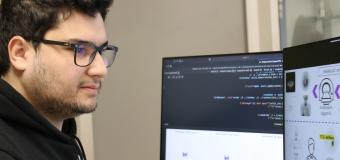
  • Best Paper Award at BIOSTEC 2025

    The work of Ouassim Boukhennoufa and his team combines AI and image optimization in nuclear medicine for more accurate and earlier detection of parathyroid anomalies.

    Read more
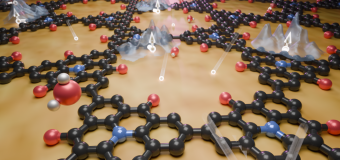
  • Kagomé structures for quantum technologies

    Quantum technologies open up promising prospects, but require the development of new materials with remarkable properties.

    Read more
  • Launch of the European SAMI project for energy-free intelligent sensors

    A major scientific and technological collaboration between Silmach and FEMTO-ST in the field of intelligent, autonomous sensors kicks off on January 30.

    Read more
  • RENATECH 2024 PhD AWARD

    Adria Grabulosa is rewarded for his work on 3D printed circuits using an original two-photon optical additive manufacturing technique.

    Read more
  • Elsevier article award at BFAS 2024

    Artificial intelligence applied to the electroerosion machining process : Loïc Guiziou1, Emmanuel Ramasso1, Sébastien Thibaud1 et Sébastien Denneulin2 won second prize for best paper at the 8th International Conference on Belief Functions.

    Read more
  • Tribute to our colleague Sarah Benchabane

    The CNRS and the university community of Bourgogne Franche-Comté are in mourning following the death of Sarah Benchabane, Director of Research at the CNRS and internationally renowned researcher in phononics, affiliated to the FEMTO-ST laboratory.

    Read more
  • Does the i-motif structure of DNA exist in the cell?

    As part of an interdisciplinary project involving FEMTO-ST, a new scientific study is reopening the debate on the very existence of these structures in DNA and their potential therapeutic interest in cell biology for the treatment of certain cancers.

    Read more
  • Lancement du projet européen FEDER régionalisé BioIMP

    Une alliance des experts de la santé et des microtechniques pour optimiser la fabrication des biomédicaments.

    Read more
  • Pink October: A smart bra project

    Zeina Al Masry talks to France 3 TV about her innovative connected bra project for the early detection of breast cancer.

    Read more
  • Vincent Giordano,winner of the EFTF Award 2024

    This award recognises a career spanning more than 35 years of research into frequency metrology, including the development of sapphire oscillators.

    Read more