
The institute
FEMTO's news

Fiber optic sensors: a technological leap thanks to quantum photon counting

Researchers at FEMTO-ST have extended the range of fiber-optic temperature sensors to 150 kilometers, using photonic detection technology derived from quantum physics.

Real-time monitoring of energy networks, particularly offshore wind farms, increasingly relies on distributed fiber optic temperature sensors. These sensors use a pulsed laser injected into an optical fiber, causing temperature-related backscattering of light through a phenomenon known as Brillouin scattering. By analyzing the frequency variations of this scattered light, it is possible to map the temperature along the entire length of the optical fiber.

However, this technology has until now come up against a range limit, generally set at 80 km for commercial systems, due to optical losses and electronic noise in the detectors.

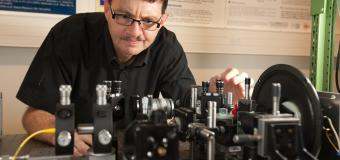
Recent work carried out at FEMTO-ST in collaboration with the Swiss company Omnisens (Prysmian Group) has made it possible to extend this limit to 150 km without intermediate optical amplification. This was achieved by using Single Photon Avalanche Detectors (SPAD), capable of counting photons with extremely low noise. By combining this technology with optimized measurement time, the researchers achieved a spatial resolution of 20 meters over the entire distance, in just one hour of measurement.

An analytical model developed from these experiments suggests that the range could be further extended to 200 km, which would be a new world record for this type of sensor.

This technological breakthrough, achieved as part of Maxime Romanet's thesis, is part of the cross-border INTERREG VI DISTANCE project, which brings together several Franco-Swiss players in photonics and energy monitoring. It also opens up promising prospects for other fields requiring high sensitivity, such as lidar systems and scientific imaging.

This work was published last February in the journal OPTICA : https://doi.org/10.1364/OPTICA.549392

Contact at FEMTO-ST : Jean-Charles BEUGNOT
 

  • Entrepreneurs-PhD Award : Second place for Vladimir Gauthier at the national level

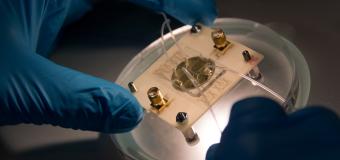
    Awarded for his « CellSelect project » he proposes a robot capable of improving the precision and speed of cell sorting in the field of innovative therapies.

    His work is the result of research carried out of Biomedical Microrobotics Team of FEMTO-ST Institute.

    Read more
  • Jean-Antoine Seon : awarded with the 2nd national PHD prize in robotics

    Jean Antoine was distinguished on November 22th at the CNRS headquarters for his pioneer international work on a micro robotic dextral hand.

    Read more
  • Elodie Pahon is the award winner of "Hydrogen Europe Research young Scientist" in the transport field

    This award recognizes her high-level works that aim developping prognosis and smart control approaches dedicated to fuel cell systems. 
    Read more
  • Emmanuel RAMASSO, recipient of a « Group Achievement Award » by NASA

    For outstanding contributions to the open data initiative by conducting and posting experimental system fault and run-to-failure data sets with exceptional scientific value.

    Read more
  • Chimeras exist...

    The American Institute of Physics (AIP) has featured our recent article in a special science highlight, known as a Scilight. Due to its novelty and close connection with ever-present phenomena, reported results are of wide interest to the general public.

    Read more
  • Entrepreneurs-PhD Award in Bourgogne-Franche-Comté: 3 laureates from FEMTO-ST institute

    Vladimir Gauthier (CellSelect project), Aliyasin El Ayouch (Metabsorber project), Romain Viala (MICAD project),   were rewarded during the regional final which took place on October 16 in Dijon

    Read more
  • « Micron d’or » Award at the international microtechnology trade fair

    For one of the most dexterous miniature robots with 7 degrees of freedom, allowing micromanipulation and microassembly in extremely confined spaces

    Read more
  • Polymer-based nanowires

    Molecules, salt and light :  an easy recipe to provide giant nanowires !

    Read more
  • Discussions about good practices around smart specialization

    In the frame of the 2014-2020 programming of the European Regional Development Funds (ERDF), the European Union has asked all the regions of Europe to draw up a "Smart Specialization Strategy" for research and innovation on their own territory: this is the S3.

    Read more
  • Optical Neural Networks start to learn...

    Work is actively in progress at FEMTO-ST in order to design the photonic architectures dedicated to our future processors that will be computing through artificial intelligence concepts.

    Read more