
The institute
FEMTO's news

Un problème ouvert résolu en informatique : une réduction efficace de la taille de systèmes

Gérard Cécé du département DISC/FEMTO-ST a présenté lors de la
conférence LICS'17, les fondations d'une série d'algorithmes efficaces
du calcul de la plus grande relation de simulation d'un système.

La notion de simulation permet de comparer les comportements de systèmes
informatiques mais aussi de réduire la taille de ces systèmes afin d'en
faciliter l'analyse. On peut prendre en exemple le cas d'un système
évoluant au travers de  près de 150 000 configurations différentes et
qui a pu être réduit, grace à cette notion de simulation, à un système
évoluant dans moins de 1 000 configurations. Il est dès lors bien plus
facile d'analyser ce système réduit pour en valider le bon comportement
ou y détecter des erreurs.

La difficulté est que les algorithmes calculant la plus grande
simulation d'un système étaient soit économes en mémoire mais pas bien
rapides, soit rapides mais utilisant beaucoup de mémoire et donc
inapplicables sur de grands systèmes. Depuis 2007 se posait le problème
de l'existence d'un algorithme à la fois rapide et économe en mémoire.
L'article présenté à LICS répond positivement à cette question et
surtout met en évidences les fondations qui permettront de proposer de
nouveaux compromis, tant théorique que pratique, entre temps de calcul
et mémoire nécessaire à ce type d'algorithmes.
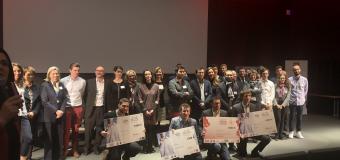
  • « Micron d’or » Award at the international microtechnology trade fair

    For one of the most dexterous miniature robots with 7 degrees of freedom, allowing micromanipulation and microassembly in extremely confined spaces

    Read more
  • Polymer-based nanowires

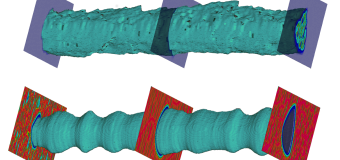
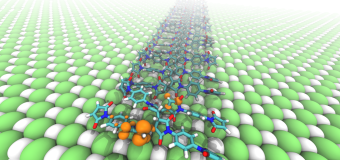
    Molecules, salt and light :  an easy recipe to provide giant nanowires !

    Read more
  • Discussions about good practices around smart specialization

    In the frame of the 2014-2020 programming of the European Regional Development Funds (ERDF), the European Union has asked all the regions of Europe to draw up a "Smart Specialization Strategy" for research and innovation on their own territory: this is the S3.

    Read more
  • Optical Neural Networks start to learn...

    Work is actively in progress at FEMTO-ST in order to design the photonic architectures dedicated to our future processors that will be computing through artificial intelligence concepts.

    Read more
  • FEMTO-ST remporte le 2e prix d'ActInSpace 2018 (Besançon)

    La troisième édition d'ActInSpace s’est déroulée en simultané dans plusieurs villes de France, d'Europe et du monde les 25 et 26 mai 2018.

    Read more
  • When the light is directed by its magnetic field

    FEMTO-ST researchers have discovered a new optical magnetic interaction to direct light fluxes. These works are published in the journal Light: Science and Applications
    Read more
  • Amar Nath Ghosh awarded at OSA Advanced Photonics Congress

    Amar Nath Ghosh won the Best student paper award of the OSA Advanced Photonics Congress , Zurich.

    Read more
  • L'équipe nanoscience de FEMTO-ST en couverture du journal de la société chimique de France

    Read more
  • Focus on the innovations of the "hydrogen-energy systems" sector

    A few days after the announcement by the government of the launch of a major national hydrogen plan, the Femto-ST institute is organizing on 20 June 2018 at the FCLAB in Belfort, a focus on innovations in the "hydrogen energy systems" sector.

    Read more
  • Robotic assembly of the smallest house in the world

    the handling and assembly capabilities of nanocomponents of the "μRobotex" platform make the buzz on the net and in the international press through the origami manufacturing of a micro-house at the end of an optical fiber whose dimensions are less than the diameter of a hair.

    Read more