

A FEMTO-ST - Diaclone partnership to accelerate the screening of new antibodies
How can we quickly identify the best antibodies from among several hundred candidates without having to purify them first? This is the scientific challenge that researchers at FEMTO-ST are tackling today, in collaboration with the Besançon-based company Diaclone
In biotechnology, the selection of antibodies directed against a target of interest—or antigen—is an essential step in the development of new molecules for therapeutic or diagnostic purposes. However, this screening phase is particularly complex when performed using periplasmic extracts. These extracts contain the candidate antibodies, but also numerous proteins and other bacterial contaminants that can interfere with their detection.
In addition to the complexity of the environment, there is another challenge: antibodies are often present in very small quantities, which makes them difficult to identify.
A new approach to identify the best candidates
To address these challenges, researchers from the Nano2BIO team in FEMTO-ST’s MN2S department and the Besançon-based company Diaclone are working to develop a more sensitive screening method capable of operating directly in these complex environments and compatible with high-throughput analysis.
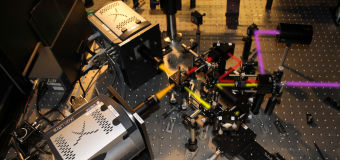
The project draws on the expertise and equipment of FEMTO-ST’s CLIPP platform, particularly label-free biophysical techniques such as surface plasmon resonance (SPR and SPRi) and BLI-type interferometry.
The idea is to be able to select the most promising antibodies without having to go through a preliminary purification step every time, which would reduce the time and consumables required for the selection process.
In particular, the researchers will use molecular tags present on the antibodies. These small “tags” make it possible to recognize and specifically capture the antibodies on “anti-tag” functionalized surfaces, using a principle similar to that of a key and a lock.
Two complementary stategies will be examined
In a first approach, known as the direct method, the protein of interest is immobilized on a BLI sensor. The sensor is then immersed in various solutions containing antibodies in a periplasmic medium. The measured signal allows for the detection of the interaction and the evaluation of the performance of the various candidates.
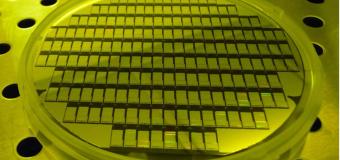
In a second, indirect approach, antibodies are directly captured from the complex medium—using their tags—on µArrays or in microwells. Bringing them into contact with the target—particularly through microfluidics—should enable multiplexed, simultaneous screening of numerous candidates and allow for a comparison of their affinities for the molecule of interest.
The best antibodies identified can then be purified and characterized in greater detail to confirm their specificity and measure their affinity under various experimental conditions.
From collaborative research to health applications
This collaboration between FEMTO-ST and Diaclone aims to overcome a technological bottleneck in the early stages of antibody selection. Ultimately, the new method could help accelerate and simplify the identification of biological molecules with the desired properties.
This project, titled “CHIPS,” has received €99,000 in funding from BPI and the Bourgogne-Franche-Comté region.
Beyond this initial project, the research could also be expanded to include other types of biological molecules and other screening strategies. It thus illustrates the value of collaborations between academic research and industry in transforming scientific and technological expertise into solutions that address concrete challenges in biotechnology and healthcare.
Contact : Jérôme DEJEU












-

INGÉNIERIE
Sciences informatiques