
The institute
FEMTO's news

Optical Neural Networks start to learn...

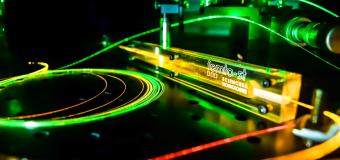
Work is actively in progress at FEMTO-ST in order to design the photonic architectures dedicated to our future processors that will be computing through artificial intelligence concepts. This is currently done in the framework of the NeuroQNet Project which led recently to an important result in photonic brain-inspired computing: an experimental training methodology based on reinforcement learning was successfully demonstrated.The setup has involved an optical Read-Out of a photonic neural network, in the form of a matrix of micro-mirrors. It succeeded in training iteratively, and efficiently, the Read-Out for the prediction of a chaotic behavior, which was computed from a photonic network processor of 900 «light-neurons». Extrapolating this approach to more practical and highly complex problems, this could lead to ultra-fast and highly efficient weather forecast, without any numerical simulation of complicated equations modeling the atmosphere. This would simply need to learn the weather motions from the observation of past weather dynamics.

Similar groundbreaking brain-inspired processing concepts are also explored at FEMTO-ST in the framework of a very practical and concrete application: the diagnostic and prognostic of fuel-cell systems, in order to increase the lifetime of this clean electrical energy generator for the future (BiPhoProc project from the ANR call OH-RISQUE; a project jointly explored by the Energy Dept. at FEMTO-ST, as well as by the Mathematics laboratory of Besançon)

Research in this field at FEMTO-ST stands at the international forefront, as illustrated by a prestige conference to be held in Hanover, Germany, on 18-20 December 2018. The conference inviting some the best researchers worldwide (Standford, Berkeley, EPFL,...) on basic concepts for cognitive computing « Cognitive Computing: Merging Concepts with Hardware ») is co-organized by FEMTO-ST (Dr Daniel Brunner)


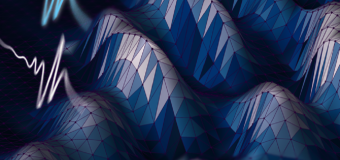
The publication on learning with photonic networks, published in  Optica, was moreover chosen for the issue cover by the editorial board, because of its high potential impact

Contact : Daniel Brunner,  OPTO Group, Optics Dept
  • CNRS "Proof by Image" competition

     Discover the selection of the 20 images selected by the CNRS, one of which is presented by FEMTO-ST, and vote for the "audience award" photo.

    Read more
  • Webconférences sur "e.Micronora"

    Dans le cadre de l’évènement virtuel sur les microtechniques « e.Micronora », FEMTO-ST propose des conférences en ligne le jeudi 24 septembre  au matin.

    Read more
  • Imaging quantum interference of entangled photon pairs of extremely high dimensionality

    Researchers from the Optics Department have developed an imaging device allowing the spatial and temporal resolution of the phenomenon of quantum interference between pairs of entangled photons of extremely high dimensionality.

    Read more
  • Concours posters doctorants : 11 ambassadeurs récompensés

    11 doctorants de 1ère année mis à l’honneur lors de l’Assemblée générale de FEMTO-ST du 10 juillet.

    Read more
  • Fei GAO Receives IEEE J.D. Irwin Early Career Award

    As a member of the SHARPAC team and Deputy Director of FEMTO-ST, Fei Gao has been recognized by the IEEE IES Society for his outstanding work in improving the reliability of hydrogen electric powertrains.

    Read more
  • Daniel HISSEL, winner of the CNRS 2020 Innovation Medal

    Full professor at the University of Franche-Comté, researcher at FEMTO-ST Institute and co-founder of a start-up on efficient hydrogen fuel cells, Daniel HISSEL is one of the four national winners of the CNRS 2020 Innovation Medal.

    Read more
  • A new source of infrared light thanks to fibre optic cascades

    Scientists from  FEMTO-ST Institute and McGill University (Montreal, Canada) have designed and developed in collaboration with three French companies a light source covering the entire mid-infrared wavelength range: from 2 to 10 µm.

    Read more
  • Topological crystals to guide waves on the water surface

    Topological crystals have the property of being conductive on their surface, but insulating in their volume which allows very efficient wave guidance by engineering the structure of these materials, generally arranged in a hexagonal symmetry, inspired by the graphene.

    Read more
  • Hommage à Raymond BESSON, « l’homme du quartz à 10-14 »

    Scientifique passionné, professeur à l’ENSMM jusqu’en 2006 et directeur du Laboratoire de Chronométrie, Electronique et Piézoélectricité entre 1978 et 2002, Raymond Besson était réputé dans la communauté internationale du temps-fréquence pour ses résonateurs à quartz et est décédé ce 15 avril.

    Read more
  • Des visières de protection produites en série

    Dans le cadre de la crise sanitaire actuelle, FEMTO-ST, en lien avec ses tutelles, s'est impliqué dans la réalisation de deux modèles de visières de protection qui sont produites en série sur le site bisontin depuis le 9 avril 2020.

    Read more