
The institute
FEMTO's news

Des biopuces pour percer les mécanismes de développement des cancers

Les chimiothérapies à base de 5-fluoroUracile (5-FU) agissent sur la division cellulaire et peuvent ainsi interrompre la croissance tumorale, cependant l’efficacité ce ces drogues s’avère aujourd’hui limitée car le traitement induit la libération d’hormones du système immunitaire, en particulier les interleukines, qui favorisent l’apparition de nouvelles tumeurs. C’est «l’effet rebond ».

Elucider le mécanisme d’induction des interleukines sous chimiothérapie permettrait d’envisager de bloquer leurs actions et d’améliorer de façon significative l’efficacité du traitement au 5-FU.

Une avancée majeure vient d’être obtenue par l’équipe du Pr. François Ghiringhelli (Inserm Avenir, CGFL, Dijon) appuyé par le potentiel biopuce à résonance des plasmons de surface (SPR) présent au sein du département MN2S de FEMTO-ST (Bruchard et al., Nature Med, Jan 2013). C’est au travers d’une étude d’interaction biomoléculaire effectuée à partir de biopuces conçues et fabriquées au sein des plateformes MIMENTO et CLIPP qu’une interaction majeure entre deux protéines (cathepsine β et NLRP3) a été certifiée directe et spécifique. Cette reconnaissance permet ainsi la libération d’interleukine 1 à l’origine de l’effet rebond Ce mécanisme élucidé in vitro a permis d’engager des études sur le petit animal dépourvu de la voie de synthèse de l’interleukine 1 (IL-1). Les taux de guérison indiquent qu'une meilleure stratégie chimiothérapeutique sera à l’avenir de combiner l'inhibition del'IL-1 et un traitement au 5-FU.

Cet article vient d’être « highlighted » par l’éditeur en chef de Science Signaling (L. K. Ferrarelli, Chemotherapeutics Inflame Tumor Growth. Sci. Signal.6, ec12 (2013)) comme étude à très fort impact pour la compréhension de l’effet rebond (et les moyens de s’en prévenir) observé fréquemment en chimiothérapie.

Contact : Wilfrid Boireau (wilfrid.boireau@femto-st.fr)
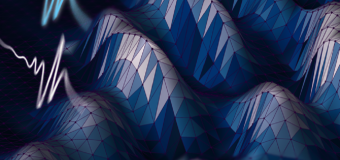
  • First demonstration of self-confined nonlinear waves in plasmonic structures

    By providing the very first experimental evidence of the existence of this phenomenon, FEMTO-ST researchers and their partners hope to be able to generate this nonlinear effect using low intensity laser sources, in order to use it for nanophotonics applications.

    Read more
  • Mengjia Wang receives the « Chinese government award 2020 »

    As a PhD student of the Optics Department of FEMTO-ST , Mengjia Wang has been recognized by the Chinese Government for his outstanding work in the field of nanophotonics and plasmonics.

    Read more
  • Laurent LARGER named Fellow 2021 of OSA

    Full professor of Physics/Optics at the University of Franche-Comté and researcher at FEMTO-ST institute, Laurent Larger is rewarded for his pioneering work on nonlinear dynamics in optoelectronics and on the development of new architectures for photonic artificial intelligence.

    Read more
  • CNRS "Proof by Image" competition

     Discover the selection of the 20 images selected by the CNRS, one of which is presented by FEMTO-ST, and vote for the "audience award" photo.

    Read more
  • Webconférences sur "e.Micronora"

    Dans le cadre de l’évènement virtuel sur les microtechniques « e.Micronora », FEMTO-ST propose des conférences en ligne le jeudi 24 septembre  au matin.

    Read more
  • Imaging quantum interference of entangled photon pairs of extremely high dimensionality

    Researchers from the Optics Department have developed an imaging device allowing the spatial and temporal resolution of the phenomenon of quantum interference between pairs of entangled photons of extremely high dimensionality.

    Read more
  • Concours posters doctorants : 11 ambassadeurs récompensés

    11 doctorants de 1ère année mis à l’honneur lors de l’Assemblée générale de FEMTO-ST du 10 juillet.

    Read more
  • Fei GAO Receives IEEE J.D. Irwin Early Career Award

    As a member of the SHARPAC team and Deputy Director of FEMTO-ST, Fei Gao has been recognized by the IEEE IES Society for his outstanding work in improving the reliability of hydrogen electric powertrains.

    Read more
  • Daniel HISSEL, winner of the CNRS 2020 Innovation Medal

    Full professor at the University of Franche-Comté, researcher at FEMTO-ST Institute and co-founder of a start-up on efficient hydrogen fuel cells, Daniel HISSEL is one of the four national winners of the CNRS 2020 Innovation Medal.

    Read more
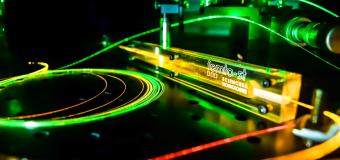
  • A new source of infrared light thanks to fibre optic cascades

    Scientists from  FEMTO-ST Institute and McGill University (Montreal, Canada) have designed and developed in collaboration with three French companies a light source covering the entire mid-infrared wavelength range: from 2 to 10 µm.

    Read more