
The institute
FEMTO's news

National research program on miniature robotics

FEMTO-ST is leading the MINIRO project, which brings together a national academic consortium of excellence in miniature robotics.

Miniature robotics is booming and is now establishing itself as a major strategic lever for responding to major industrial, economic, and societal challenges. By launching the PEPR Robotics program, led by the CNRS, the French government has a clear objective: to remove scientific and technological barriers in order to build robotics that is powerful, frugal, and responsible.

The MINIRO (Miniature Robotics) project, coordinated by Marie and Louis Pasteur University (UMLP), is one of the projects under this PEPR (Priority Economic Research Program) as part of France 2030.

To promote their deployment, the project focuses on three key scientific challenges:

• improving the dexterity and reliability of miniature robots,

• optimizing energy and power transmission despite severe space constraints,

• ensuring high performance despite the significant influence of their environment...

Led by the FEMTO-ST Institute in collaboration with the ICube laboratory, the MINIRO project brings together a national academic consortium of excellence comprising the UMLP, the University of Strasbourg, the CEA, Sorbonne University, the CNRS, the University of Montpellier, IMT Atlantique, the University of Technology of Compiègne, SUPMICROTECH, Inserm, ENSTA, and Grenoble INP - UGA.
By combining their complementary scientific and technological expertise, these partners aim to demonstrate the full potential of miniature robotics in order to secure France's strategic position in a field that is experiencing rapid growth worldwide.

The goal is therefore to develop new technological building blocks based on innovative robotic architectures. This work will focus in particular on the design of submillimeter-sized robots with integrated actuation mechanisms, as well as the development of continuously deformable robots capable of interacting adaptively with their environment.

All of these technologies will be designed, integrated, and deployed in experimental demonstrators in order to validate their performance, robustness, and application potential.

The official launch of the project took place on February 3 and will run for 76 months, with a total budget of €8,924,156 (including €3,000,000 in funding from France 2030).

.The nine laboratories involved are: FEMTO-ST, ICube, CEA List, ISIR, Lab-STICC, LIRMM, LS2N, Laboratoire Roberval, and TIMC.

Contact : Cédric Clevy, Institut FEMTO-ST
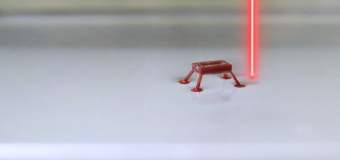
 

  • CNRS "Proof by Image" competition

     Discover the selection of the 20 images selected by the CNRS, one of which is presented by FEMTO-ST, and vote for the "audience award" photo.

    Read more
  • Webconférences sur "e.Micronora"

    Dans le cadre de l’évènement virtuel sur les microtechniques « e.Micronora », FEMTO-ST propose des conférences en ligne le jeudi 24 septembre  au matin.

    Read more
  • Imaging quantum interference of entangled photon pairs of extremely high dimensionality

    Researchers from the Optics Department have developed an imaging device allowing the spatial and temporal resolution of the phenomenon of quantum interference between pairs of entangled photons of extremely high dimensionality.

    Read more
  • Concours posters doctorants : 11 ambassadeurs récompensés

    11 doctorants de 1ère année mis à l’honneur lors de l’Assemblée générale de FEMTO-ST du 10 juillet.

    Read more
  • Fei GAO Receives IEEE J.D. Irwin Early Career Award

    As a member of the SHARPAC team and Deputy Director of FEMTO-ST, Fei Gao has been recognized by the IEEE IES Society for his outstanding work in improving the reliability of hydrogen electric powertrains.

    Read more
  • Daniel HISSEL, winner of the CNRS 2020 Innovation Medal

    Full professor at the University of Franche-Comté, researcher at FEMTO-ST Institute and co-founder of a start-up on efficient hydrogen fuel cells, Daniel HISSEL is one of the four national winners of the CNRS 2020 Innovation Medal.

    Read more
  • A new source of infrared light thanks to fibre optic cascades

    Scientists from  FEMTO-ST Institute and McGill University (Montreal, Canada) have designed and developed in collaboration with three French companies a light source covering the entire mid-infrared wavelength range: from 2 to 10 µm.

    Read more
  • Topological crystals to guide waves on the water surface

    Topological crystals have the property of being conductive on their surface, but insulating in their volume which allows very efficient wave guidance by engineering the structure of these materials, generally arranged in a hexagonal symmetry, inspired by the graphene.

    Read more
  • Hommage à Raymond BESSON, « l’homme du quartz à 10-14 »

    Scientifique passionné, professeur à l’ENSMM jusqu’en 2006 et directeur du Laboratoire de Chronométrie, Electronique et Piézoélectricité entre 1978 et 2002, Raymond Besson était réputé dans la communauté internationale du temps-fréquence pour ses résonateurs à quartz et est décédé ce 15 avril.

    Read more
  • Des visières de protection produites en série

    Dans le cadre de la crise sanitaire actuelle, FEMTO-ST, en lien avec ses tutelles, s'est impliqué dans la réalisation de deux modèles de visières de protection qui sont produites en série sur le site bisontin depuis le 9 avril 2020.

    Read more