
The institute
FEMTO's news

National research program on miniature robotics

FEMTO-ST is leading the MINIRO project, which brings together a national academic consortium of excellence in miniature robotics.

Miniature robotics is booming and is now establishing itself as a major strategic lever for responding to major industrial, economic, and societal challenges. By launching the PEPR Robotics program, led by the CNRS, the French government has a clear objective: to remove scientific and technological barriers in order to build robotics that is powerful, frugal, and responsible.

The MINIRO (Miniature Robotics) project, coordinated by Marie and Louis Pasteur University (UMLP), is one of the projects under this PEPR (Priority Economic Research Program) as part of France 2030.

To promote their deployment, the project focuses on three key scientific challenges:

• improving the dexterity and reliability of miniature robots,

• optimizing energy and power transmission despite severe space constraints,

• ensuring high performance despite the significant influence of their environment...

Led by the FEMTO-ST Institute in collaboration with the ICube laboratory, the MINIRO project brings together a national academic consortium of excellence comprising the UMLP, the University of Strasbourg, the CEA, Sorbonne University, the CNRS, the University of Montpellier, IMT Atlantique, the University of Technology of Compiègne, SUPMICROTECH, Inserm, ENSTA, and Grenoble INP - UGA.
By combining their complementary scientific and technological expertise, these partners aim to demonstrate the full potential of miniature robotics in order to secure France's strategic position in a field that is experiencing rapid growth worldwide.

The goal is therefore to develop new technological building blocks based on innovative robotic architectures. This work will focus in particular on the design of submillimeter-sized robots with integrated actuation mechanisms, as well as the development of continuously deformable robots capable of interacting adaptively with their environment.

All of these technologies will be designed, integrated, and deployed in experimental demonstrators in order to validate their performance, robustness, and application potential.

The official launch of the project took place on February 3 and will run for 76 months, with a total budget of €8,924,156 (including €3,000,000 in funding from France 2030).

.The nine laboratories involved are: FEMTO-ST, ICube, CEA List, ISIR, Lab-STICC, LIRMM, LS2N, Laboratoire Roberval, and TIMC.

Contact : Cédric Clevy, Institut FEMTO-ST
 

  • Julio Andrés Iglesias Martínez receives the Best Student Award at IEEE Ultrasonic Symposium

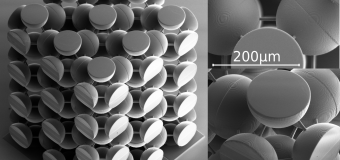
    His work consists in achieving three-dimensional phononic crystals at the micro-scale with record band-gap width.

    Read more
  • Lessons on textile history and fibre durability from a 4,000-year-old Egyptian flax yarn

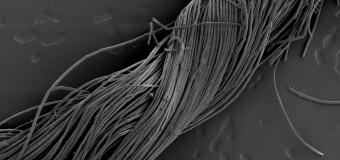
    Published in the journal Nature Plants, work involving FEMTO-ST scientists is helping to propose ever more efficient and resistant materials based on flax fibers.

    Read more
  • Les Visites insolites du CNRS 2021 : plongez au cœur de la science !

    Plonger dans la peau d’une cellule, comprendre les systèmes de conversion d’énergie ou encore savoir pourquoi et comment l’hydrogène pourrait être le carburant du futur…grâce aux visites insolites organisées à Besançon et Belfort par FEMTO-ST !

    Read more
  • Programmable matter: world record attempt

    A FEMTO-ST research team is trying to get the record for the largest number of autonomous light blocks assembled in a structure approved by the "Guiness World Record".

    Read more
  • Rodolphe Boudot receives the 2020 EFTF Young Scientist Award

    The IEEE EFTF-IFCS 2021 is a joint conference of the European Frequency and Time Forum and the IEEE International Frequency Control Symposium. The 2021 joint conference, originally planned for Paris in April, has been converted to a virtual conference from 7th to 17th July, 2021

    Read more
  • Giacomo Clementi, grand prize i-PhD

    For his work on Lithium Niobate (LiNbO3), which has led to the design of original and efficient devices for the recovery of vibratory energy by the piezoelectric effect, in particular for connected objects.

    Read more
  • Concours des doctorants-ambassadeurs FEMTO-ST

     Remise de prix aux trois vainqueurs du concours de meilleurs posters de présentation de travaux de thèse lors du séminaire interne FEMTO-ST du 2 juillet.

    Read more
  • Understanding energy transfers during photosynthesis

    Using three pigments manipulated by scanning tunneling microscopy, researchers from IPCMS and FEMTO-ST are studying energy transfers between molecules to gain a finer understanding of the photosynthesis mechanism in plants. This work is published in Nature Chemistry.

    Read more
  • International Day of Light on May 16th

    This year, the Student Chapter of FEMTO-ST organizes on this occasion a photo contest on the theme ′′ Light phenomena in everyday life ".

    Read more
  • AMAROB labelled Deep Tech company

    Spin off of FEMTO-ST, Amarob technologie has received the Deep Tech company label awarded by Bpifrance.

    Read more