
The institute
FEMTO's news

You are here

Dissociating Nitrogen Molecules Using Silicon Atoms

Researchers from FEMTO-ST have just demonstrated a novel process for dissociating nitrogen molecules through low-energy footprint processes, a crucial step towards the decarbonized production of high-value-added molecules.

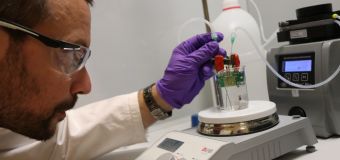
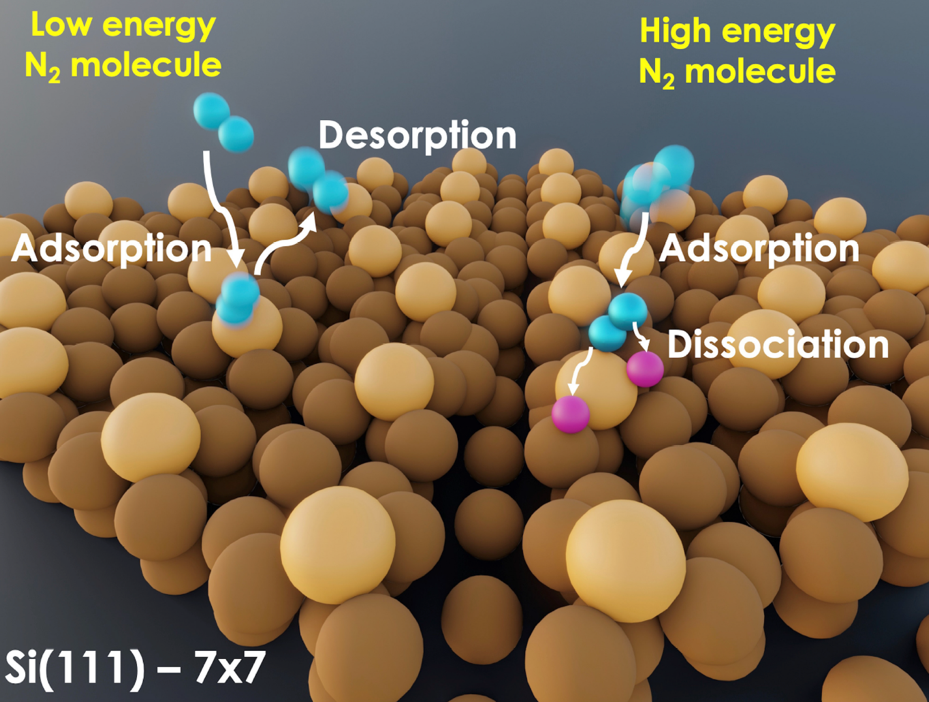
The industrial synthesis of ammonia from nitrogen molecules represents 2% of global energy consumption because this synthesis requires very high pressures and temperatures (200 atmospheres, 600°C). The development of energy-efficient processes for the dissociation of nitrogen molecules is a major challenge for the ecological transition. To develop these types of processes, it is essential to understand the elementary mechanisms that cause the dissociation of these nitrogen molecules. As part of the OVATION project, funded by the National Research Agency, ChimieParisTech and FEMTO-ST have demonstrated that silicon atoms have the ability to dissociate these nitrogen molecules at room temperature and under very low pressures (<1 atmosphere). This result was obtained using a scanning tunneling microscope (STM, link to previous news if possible), which allows the study of the modification of the electronic properties of silicon atoms when exposed to nitrogen molecules.

By adjusting the experimental conditions, the researchers demonstrated that silicon atoms could transfer electrons to nitrogen molecules and thus cause their dissociation. This process is efficient and requires little energy.

After successfully demonstrating a new type of nitrogen molecule dissociation, the second step is to form the ammonia molecule. This requires reacting hydrogen molecules inside the STM microscope, a new scientific challenge for the members of FEMTO-ST's nanosciences group.

Contacts :
Prof. Dr Frank PALMINO
Dr. Fréderic CHERIOUX

This article is highlighted as the cover picture of  ChemPhysChem : https://chemistry-europe.onlinelibrary.wiley.com/doi/full/10.1002/cphc.202300458
 

  • Launch of the European i-Nano-T project

    The Bourgogne Franche-Comté region is banking on regional scientific and industrial synergy to drive innovation in nanomedicine.

    Read more
  • National Hydrogen Thesis Award for Clotilde ROBERT!

    This award recognizes her work on optimizing hydrogen-powered electric powertrains using a novel approach that combines technological performance, environmental sustainability, and social responsibility.

    Read more
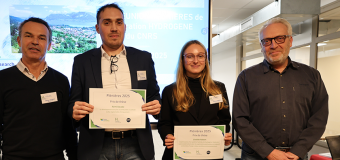
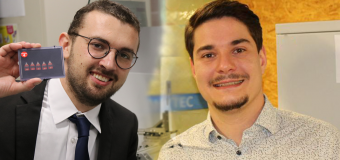
  • I-PhD Innovation competition : Two winners from FEMTO-ST in 2025

    Valentin Reynaud (microforce metrology) andGaultier Gibey (predictive maintenance of hydrogen sytems) are the winners of this sixth edition of the national innovation competition .

    Read more
  • ZETA-SE : A new start-up born out of the work of FEMTO-ST

    Founded in late July 2025, the company offers customized anti-vibration solutions for industry.

    Read more
  • RÉESPIRATION Project: When art breathes to the rhythm of science and medicine

    An interactive work of art born of an unprecedented dialogue between artists, carers and researchers to raise awareness of breathing and its calming power

    Read more
  • Fiber optic sensors: a technological leap thanks to quantum photon counting

    Researchers at FEMTO-ST have extended the range of fiber-optic temperature sensors to 150 kilometers, using photonic detection technology derived from quantum physics.

    Read more
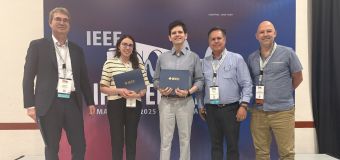
  • Two FEMTO-ST PhD students win awards at the IFCS-EFTF 2025 international conference

    Their innovative work paves the way for new environmental monitoring devices and a new generation of atomic micro-clocks.

    Read more
  • Detecting hydrocarbon pollutants in groundwater

    A major environmental and health challenge taken up by FEMTO-ST researchers working with TotalEnergies

    Read more
  • 3 tenure track position at FEMTO-ST

    In 3 of its strategic research priorities: micro-nanotechnologies, artificial intelligence and sustainable development.

    Read more
  • FEMTO-ST is launching its support program for MSCA Postdoctoral Fellowships applications !

    The Boostcamp is a two-day intensive workshop aimed at helping international researchers develop a strong application for the 2025 Marie Skłodowska-Curie Postdoctoral Fellowship.

    Read more

Pages